Rich amidst Poverty? Or Poor amidst Riches?
Editor’s Note: Lay missioner Mary Liston Liepold, OFS reflects on how scarcity and abundance influence how we might treat our neighbors.
When my middle son was a toddler, every time he saw a fountain, he would stand up in his stroller and laugh out loud. I still hear that liquid laughter whenever I see a fountain flow. The courtyard of the hotel that hosted the OFS Quinquennial in 2016 had a spectacular one, and it struck me as a clear metaphor for God’s superabundant, overflowing goodness. I am writing today on the Feast of Francis, our patron Saint and our model for lives that embrace joy and contentment in abundance and in voluntary poverty.
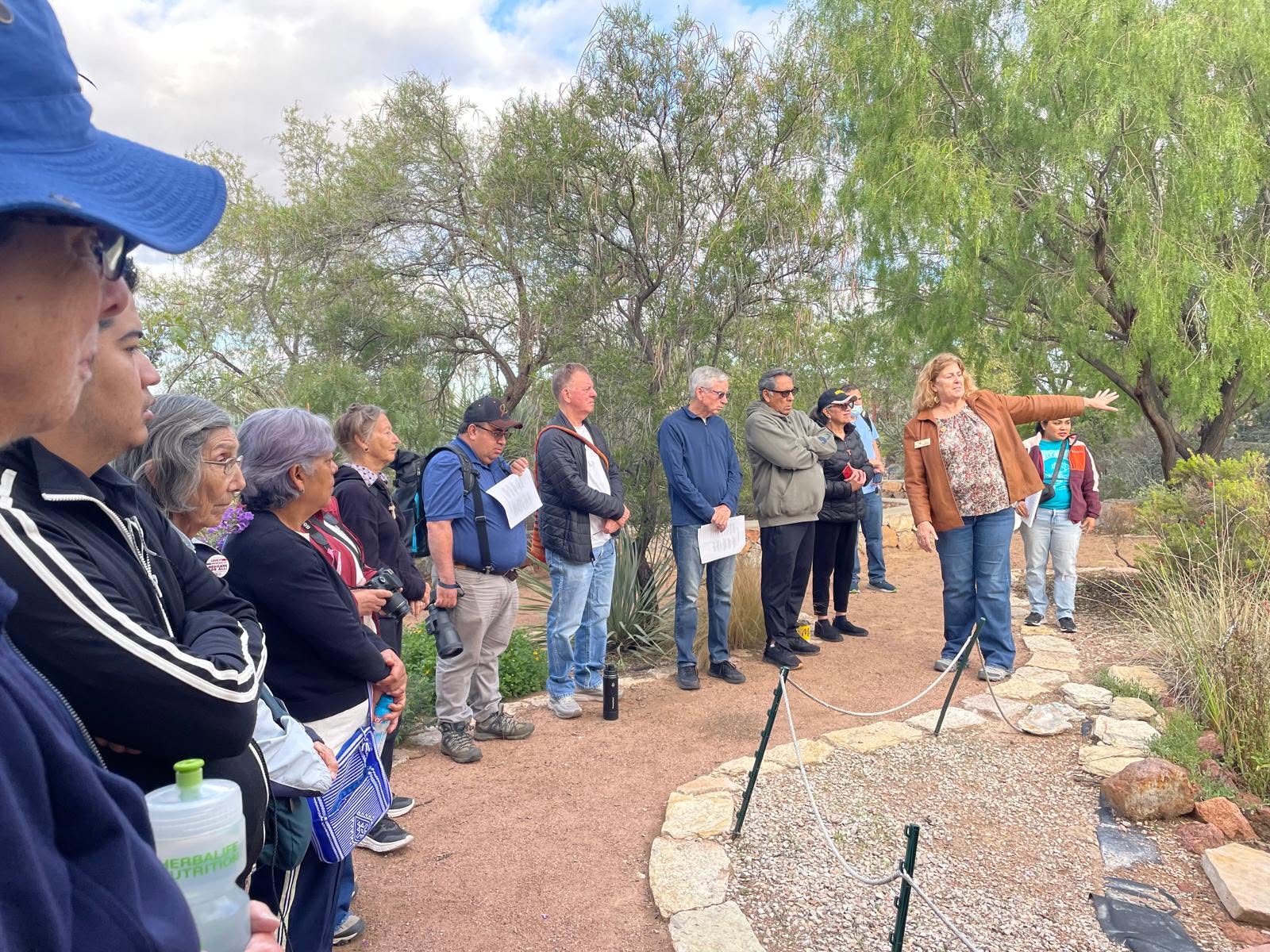
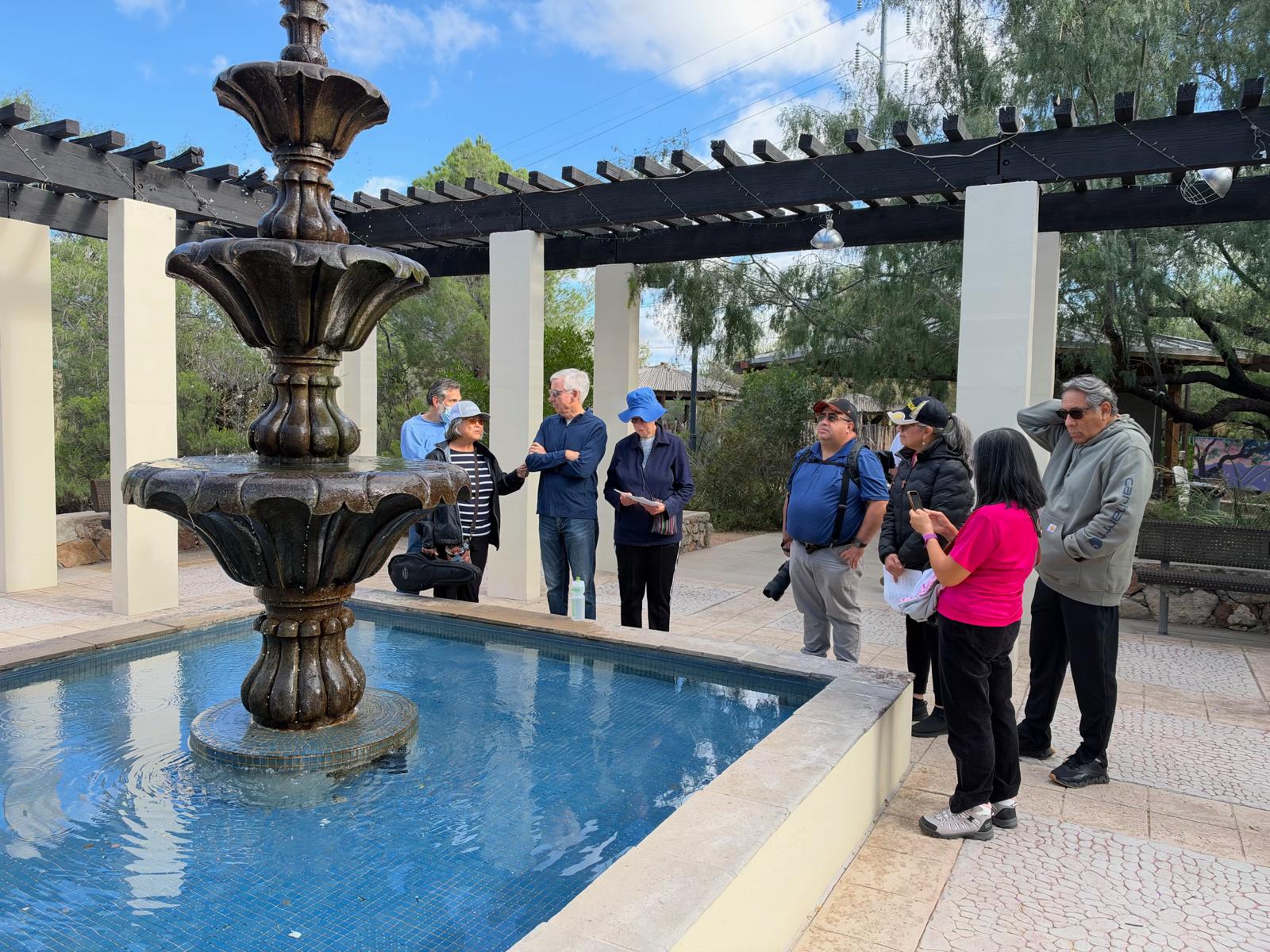
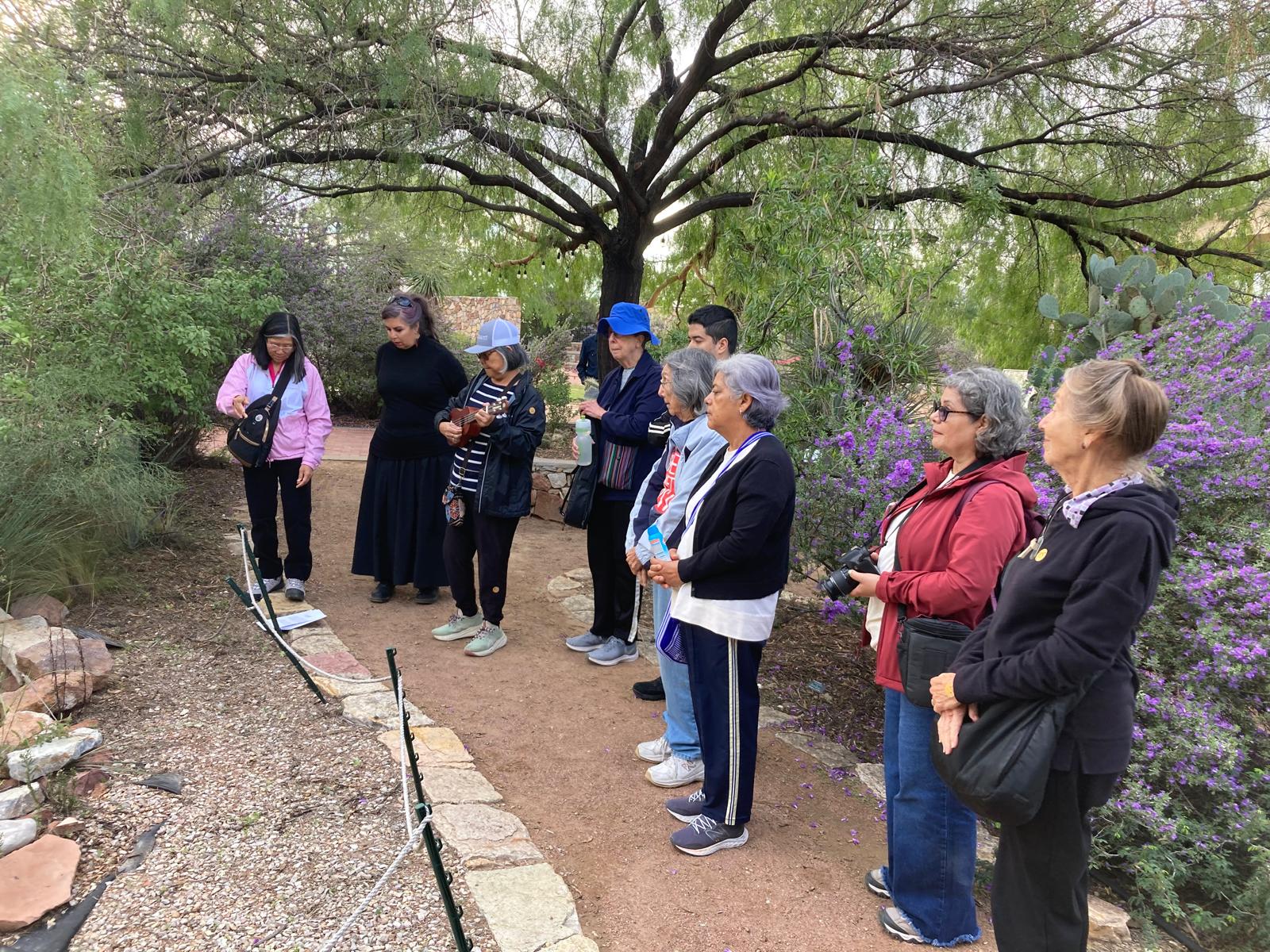
Yesterday, the Laudato Sí Commission of the El Paso Diocese, on which I serve, sponsored an early morning prayer walk in our magnificent, 52-acre Keystone Heritage Park, which also features a fountain. Several members of the parallel commission in Juarez joined our group. One of the volunteer guides pointed out a tree with brown edges on some of its leaves and explained that leafcutter bees clip small crescents from those outer edges to line the cozy burrows where they lay their eggs. The trees are unharmed, and the mature leafcutters are super-pollinators that add great value to the ecosystem. From the Canticle we read in closing: “Praised be you, my Lord, in all your creatures!”
Earlier this week I got to give a presentation on the history and culture of my adopted twin cities, Ciudad Juarez and El Paso. Since I’m hardly a historian, I had to learn before I could share, and I enjoyed the research immensely. We all have mixed feelings about AI. Still, it’s hard not to be grateful for the abundance of information it places at our fingertips.
The theme that leapt out from all my reading is how consistently our nation, despite its wealth of land, people, and resources, has operated from a presumption of scarcity instead of abundance. Since 1956, our official national motto has been “In God we trust.” But DO we?
The inexcusable assumption that people who don’t look and live like us are less than human, and only valuable to the extent that they serve our needs, was here from the beginning. There was presumably never enough to share equally. After several centuries of the brutal enslavement and impoverishment of stolen Africans, the 1790 Naturalization Act ruled that only “free white persons” were citizens. The 1830 Indian Removal Act codified the murder and exploitation of the indigenous that was already longstanding national policy. The railroads reached the far West in 1881, and the Chinese Exclusion Act followed immediately, in 1882. During the Depression, as again today, scarcity caused by greed was blamed on “foreigners,” and mass deportations ensued.
While some blame the victims and stir up wars for profit, others follow Christ and Francis in accompanying those who Dorothy Day ironically called “the undeserving poor.” I am privileged to work beside scores of those who serve them joyfully. I believe the difference between angry blamers and happy helpers has everything to do with how we see God.
Do we believe in a God who chose us all, who loves us all unconditionally, who filled the universe with extravagant diversity and called it good? Or do we believe in a God who loves some of us some of the time, when our appearance and comportment make the grade? Do we believe there is really, always enough to share? Or do we believe that resources are scarce and we have to get ours before someone else does? Do we celebrate Mother Earth’s intricate interconnections? Or do we reach for the insecticide?
Do we believe in enough, and know the difference between our wants and our needs – between need and greed? One of the things I thank my mother for, long after her passing, is teaching us that difference. I feel sad for people who don’t enjoy their luxuries because they don’t know they’re luxuries. Poor dears! With gratitude, enough is abundance. Entitlement is the opposite of gratitude – and we’ll never be grateful if we believe we’re entitled.
Even the prisoners in our infamous camps are rich when they truly believe that God is love. Their faith constantly inspires my own. They long for home, yet they trust our ever-generous and all-abundant God to supply their needs. They can rejoice with Francis, the little poor man:
O praise and bless my Lord,
thank Him and serve Him,
with great humility!
Question for Reflection: Where are you recognizing God’s abundance and generosity this week?
Pictures from the prayer walk that Mary attended:
Tagged in:

