Hospitality, Nature, and Migration
Editor’s Note: DC Service Corps volunteer David Adah-Ogoh shares his reflections on hospitality, nature, and migration supported by verses from the book of Deuteronomy.
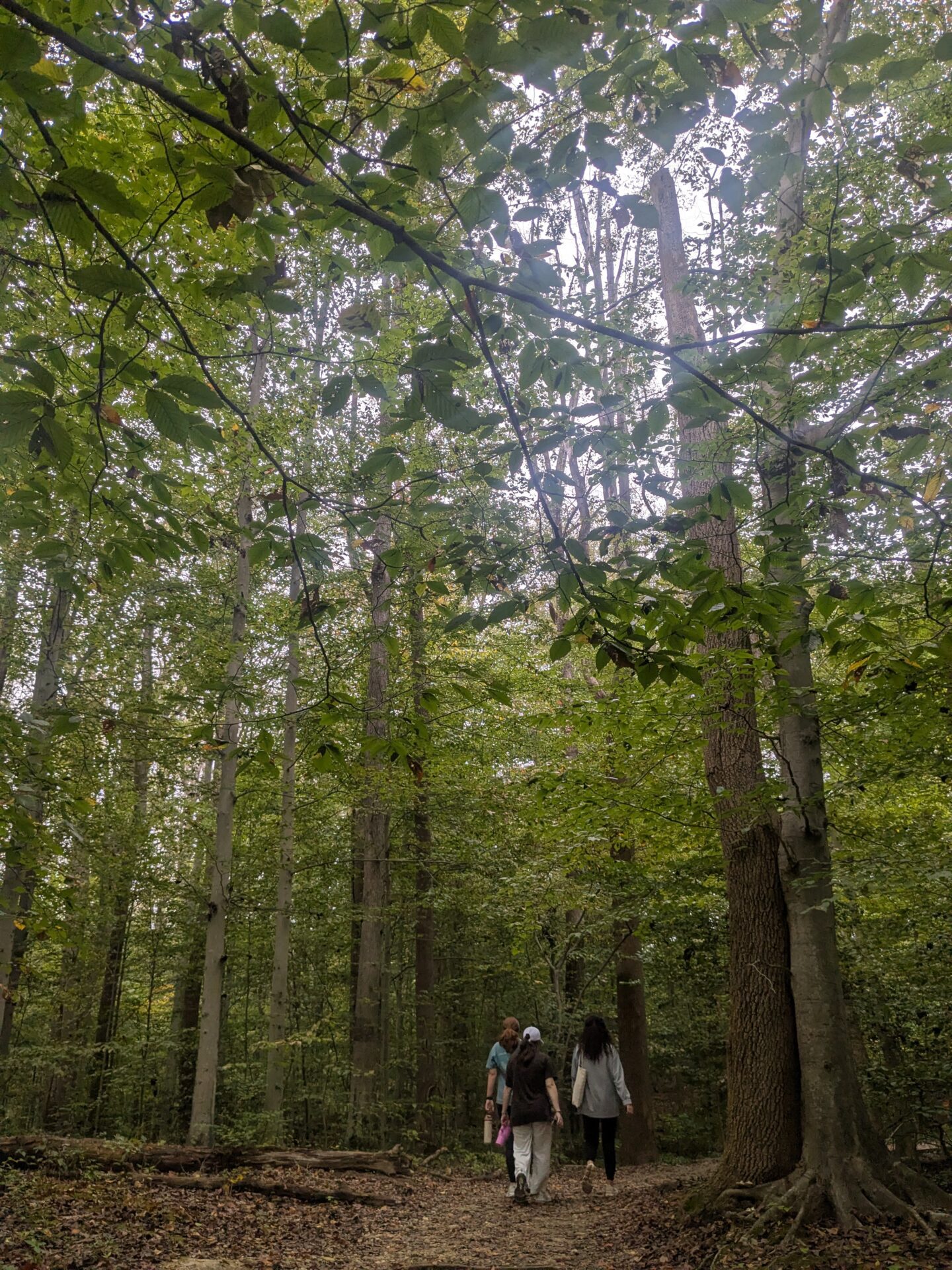 I want to begin this reflection in Rock Creek Park. Rock Creek Park is a rolling oasis of bramble and pine and holly and brook right in the heart of Washington. Over its 1,754 pristine acres, it soaks up and clarifies the heart of the bustling capital around it. When it was first chartered by Congress in 1890, it was only the third such park (after Yellowstone and Mackinac) to be “perpetually dedicated and set apart as a park and pleasure ground for the benefit and enjoyment of the people of the United States”. This history–and a scenic mile walking trail that could be reasonably covered in two hours–made it the perfect place for the Casa to take a nature pilgrimage.
For this year’s Season of Creation, the Catholic Climate Covenant and the Laudato Si’ Movement encouraged Catholics to make nature pilgrimages in their local communities, celebrating the earth as our sacred trust. On the afternoon of September 30th, our little group looped through the park, meditating on Scripture and praying at particularly lovely views. Weighing deep on my mind throughout our walk, however, was the vision of public belonging Rock Creek Park represented: a sense of belonging borne out of our recognition of a common bounty. On our fourth stop, we read from the Book of Deuteronomy:
For the land which you are entering to take possession of it is not like the land of Egypt, from which you have come, where you sowed your seed and watered it with your feet, like a garden of vegetables; but the land which you are going over to possess is a land of hills and valleys, which drinks water by the rain from heaven, a land which the Lord your God cares for; the eyes of the Lord your God are always upon it, from the beginning of the year to the end of the year. (Deuteronomy 11:10-12)
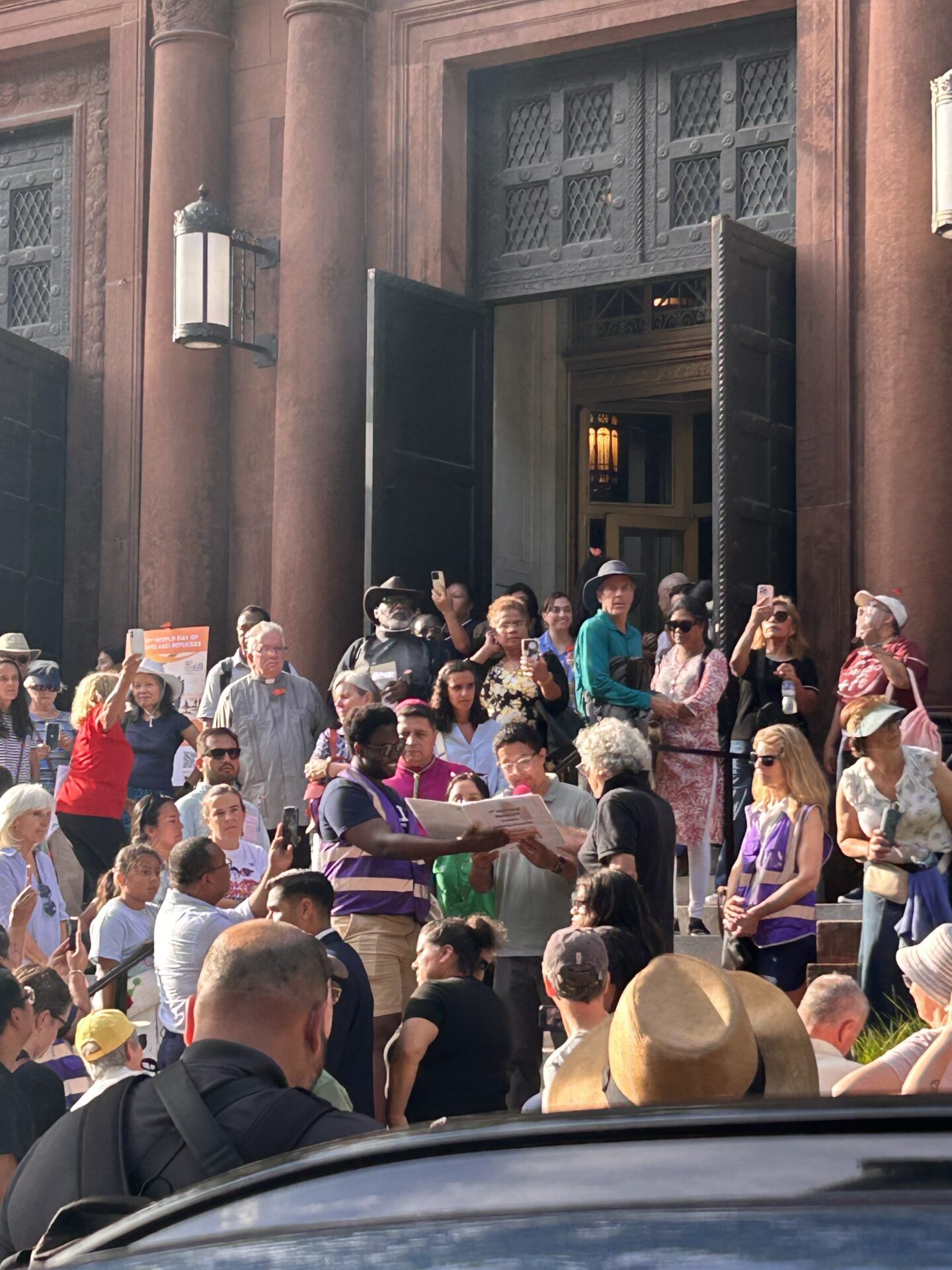 I want to begin this reflection again, with the Shrine of the Sacred Heart. The Shrine of the Sacred Heart stands in Columbia Heights, a great neo-Byzantine jewel-box of a church from the turn into the 20th century. It has stood in pride of place on Sacred Heart Way for 102 years, a third of those under the care of the Capuchin Franciscan Friars. It has also long been a safe haven for new migrant communities that arrive in Washington, D.C.; on Sundays, the Eucharist is celebrated there in five languages. Its history–and its situation at the head of a one-day only scenic trail snaking through to St. Matthew’s Cathedral in downtown Washington–made it the perfect place for the Casa to gather to attend a procession for the World Day of Migrants and Refugees.
In our two months in Washington, we have been received everywhere we have gone with the most generous hospitality. It is impossible for me not to account for the contrast that hospitality cuts with the broader moment of upheaval that shapes our daily life in Washington. As the Casa’s sole non-American, I share the daily imminent threat faced by our migrant neighbors in a very personal way. The World Day of Migrants and Refugees procession, however, was an opportunity to raise my voice with hundreds of other people of good will, as a testament to our joy and solidarity. As we walked, Deuteronomy rumbled in my head:
When you harvest the grapes in your vineyard, do not go over the vines again. Leave what remains for the foreigner, the fatherless and the widow. Remember that you were slaves in Egypt. That is why I command you to do this. (Deuteronomy 24:21-22)
I have long been intrigued by the three-part formulation “the stranger, the widow, and the orphan”, a rhetorical core to which God often returns in the Old Testament. In the Rule that Saint Francis left to his brothers, he enjoined them to walk as “pilgrims and strangers in this world”, poor in things but rich in virtue (Rule of St. Francis, section 6). He counterposes private possession to the “confident going after alms” that “leads to the land of the living”. It places a different character on the injunctions God lays upon the Israelites in Deuteronomy: they must not forget, as they enter this land of bounty, that they must bear yourself as the strangers who will come to live among them, for the stranger is at the heart of God’s justice. For St. Francis, the “stranger”hood of the brothers was not one of dispossession but a call to charity, to a bounty that could know no bounds by race, religion, or nation. The recognition of this bounty is inextricable from the beloved community’s sense of pilgrimage, of accompaniment. I am glad that as strangers settling into our new home, FMS has given us the opportunity to walk on two of the most urgent journeys the Church must make today: to care for our common home and for the planet. Where will those journeys take us? Deuteronomy answers:
For it is no trifle for you, but it is your life, and thereby you shall live long in the land which you are going over the Jordan to possess. (Deuteronomy 32:47)
Question for Reflection: Where might you be called to be a “pilgrim and stranger” in your everyday life?
Tagged in:

